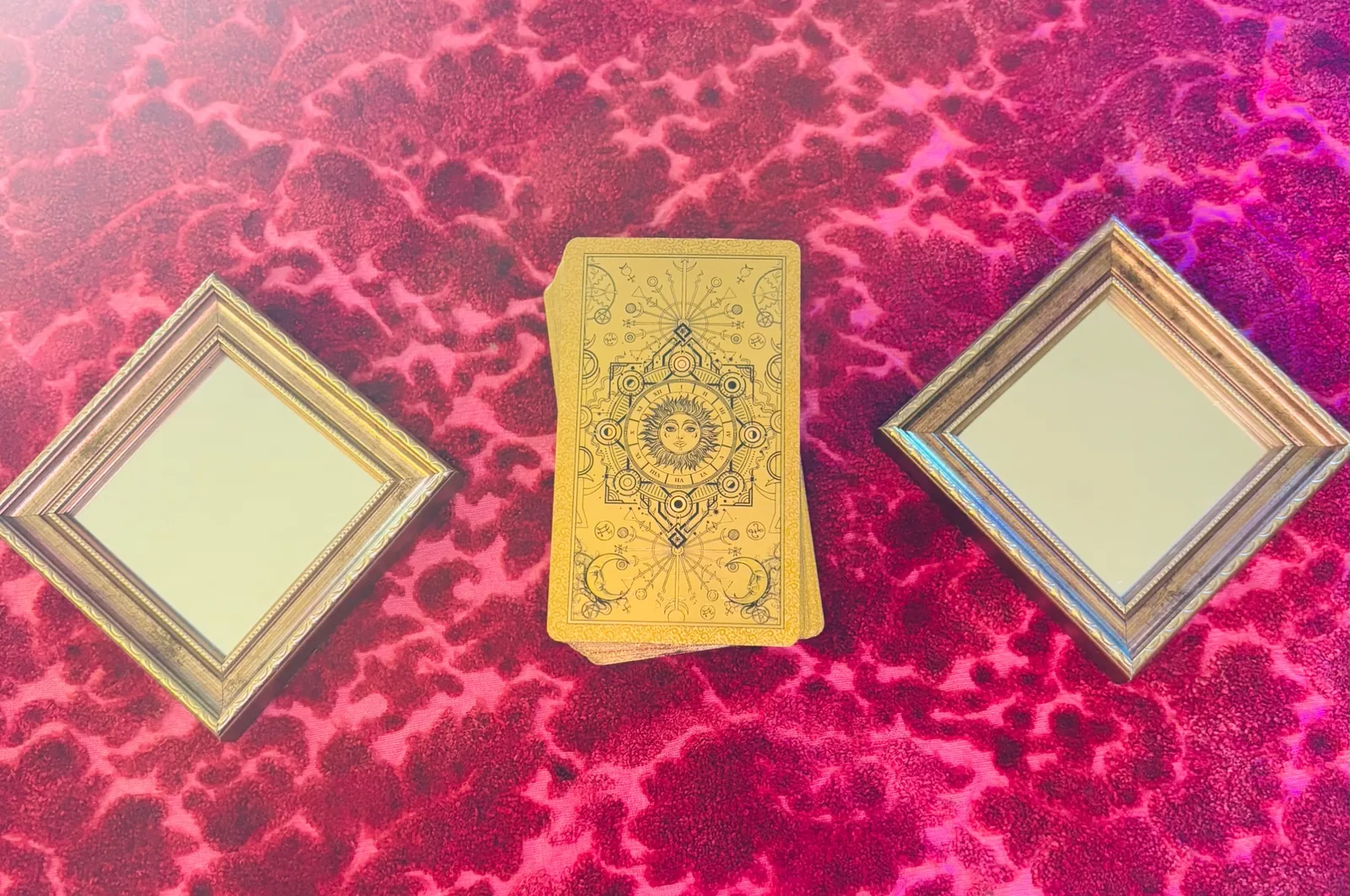
Many know that a Tarot deck consists of seventy-eight cards, each one displaying a small artistic masterpiece, ripe and rich with meaning, that can somehow fit into the palm of your hand. Through these mini-visions depicted upon humble cardstock, we can find the outlines of ourselves, our lives, and the people, events, and lessons we must learn along our path.
Yet somehow magically, a mere pack of cards transforms, in the right hands, into a sort of reflective device. Each card can be available to scry openly into one’s own subconscious. A Tarot reading is a place where past, present, and even potential future are spun and woven into a story that you understand on a psychological, cellular, or soul-level.
In this way, the Tarot is like a mirror, not something fixed forever into the future. Framed, yes, and a mirror’s glass is not without a measure of danger. But when the subject moves, the object gazes back, cool and unaffected. Look at the cards with an open mind, and you will see many parts of yourself you know, you imagine, you strive to become, or that you may have even forgotten somewhere.
When I prepare to give readings, I enjoy meticulously crafting the look of each tarot table, whether for a large-scale event or a quiet one-on-one encounter. But there are a few familiar things I’m always sure to include (and yes, my deck of cards is among these).
One is a mini crystal ball, gifted by Jack, to keep the vibe flowing. The others are my tiny twin golden mirrors, gifted to me by my Mother.
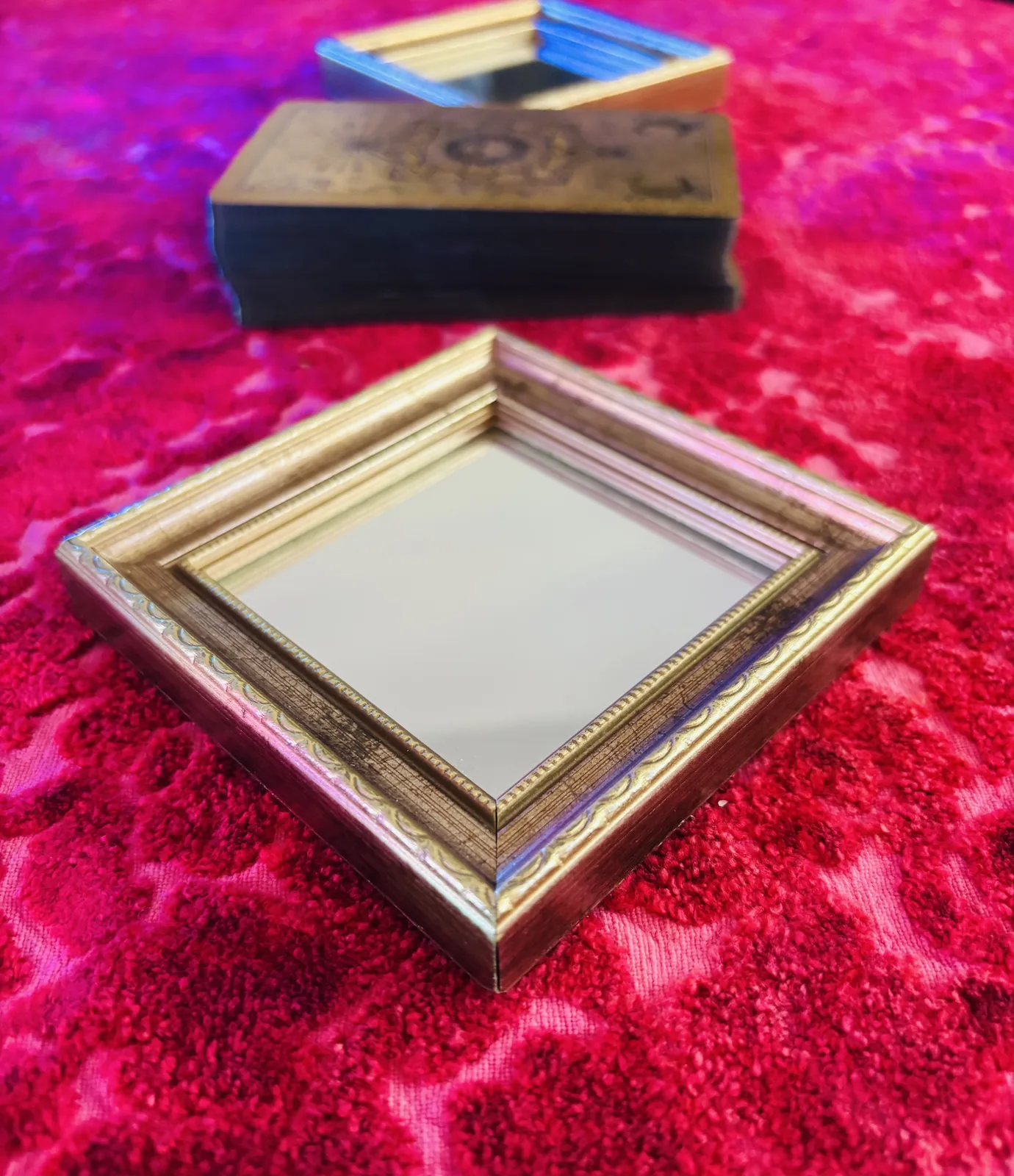
I keep the mirrors on the table as a tangible reminder for my querents that Tarot is, fundamentally, a self-reflective tool. It holds a sacred place for you with your own unique reflection. What you bring to the table is often what you will take away with you – and even more so. This is an inside job, and while a skilled reader may assist in interpreting the cards’ symbology, you will ultimately tell the tale’s end.
In many ways, the practice of Tarot, born from an ancient card game, is a collaborative art between reader and querent. The more the querent can open and invite, the more space they will have to receive in that openness. You will first see what you expect to see. But the mirror is clear, and the cards have an uncanny way of drawing out the things that are present, albeit hidden. Whether you imagine the Tarot to be a judge’s gavel or a clear pool of water where light can play will inform the reading profoundly. Gather the gems that catch your eye and leave the rest to ponder for another time.
Ultimately, the Tarot, through its singular knowing, is a matter of perspective. Tarot is reflective, not necessarily predictive. It’s a lens through which we can better see ourselves, and see how we always have a new opportunity to grow.
When I retired from my previous career, I was heartbroken and in furious denial. In my personal readings, cards like the Hanged Man and Death, a pair of “scary” images, would appear and reappear. My choice was to take pause and wait for the rebirth, as the cards recommend. And here we are.